

A productive day of fishing starts long before the first cast. The engine you mount, the way you set it up, and how it behaves at trolling speed all shape your success. When you browse outboard motors for sale, think like an angler first and a speed enthusiast second. This guide covers the power choices that serious fishermen tend to value most.
Why Trolling Performance Comes First
Anglers spend most of their time moving slowly, not racing across open water. An engine that holds a steady, low idle without stalling or fouling its plugs is worth far more than an impressive top speed on paper. Reliable starting also builds trust in the boat as a whole.
Check that the model you consider can troll smoothly for hours. Some engines include special low-speed settings that keep the boat gliding at a pace fish find natural and unthreatening, which can noticeably improve your chances.
Choosing Power for Different Waters
Small lakes and quiet rivers rarely need much power. A light, efficient motor gets you to your spot and lets you carry extra gear without overloading the stern or making the boat sluggish in tight, shallow places.
Bays, big reservoirs, and coastal runs are different. Longer trips and rougher conditions call for stronger output, so you can reach distant structure quickly and return home before the weather turns against you in the afternoon. Always plan for the heavy day, not the average one.
A Dependable Choice for Anglers
Many experienced fishermen lean toward a Mercury outboard for its balance of quiet running, quick starts, and widespread service support. Those qualities matter a great deal when you depend on the boat before dawn on a cold morning. Cost and weight are important, but so is real-world handling.
Whatever you choose, make sure the engine can handle your typical load of coolers, rods, batteries, and companions. Fishing boats get heavy faster than most people expect, and a stressed motor never performs as well.
Keeping the Noise Low
Sound travels through water, and fish respond to it. A quiet idle helps you approach shallow flats and calm pockets without spooking the very thing you came out to catch in the first place.
Rubber mounting, proper trim, and a clean propeller all reduce vibration. Small adjustments often make the boat noticeably more peaceful, and your results may improve because of it. Quiet is a real fishing tool, not just a comfort.
Fuel Range and Peace of Mind
Plan your fuel the way you plan your tackle. Work out how far you travel, how long you troll, and how much margin you want for unplanned detours. Running low far from shore is never worth the risk. Your safety margin matters more than any single gauge reading.
An efficient engine extends your range, which means more time fishing and less time worrying. Carry a spare can if your favorite spots lie far from the nearest fuel dock, and store it securely away from heat.
Setting Up the Transom Properly
Mount the engine at the correct height so the propeller bites cleanly without dragging the hull. Add a trolling plate or a small auxiliary motor if you want extra precision around weed beds, docks, and submerged structure.
Test the setup in calm water before a big trip. Watch how the boat planes, turns, and holds a straight line. A twenty-minute shakedown run will reveal almost every adjustment you still need to make. Preparation is the easiest habit to build and the most rewarding.
Electrical Needs and Accessories
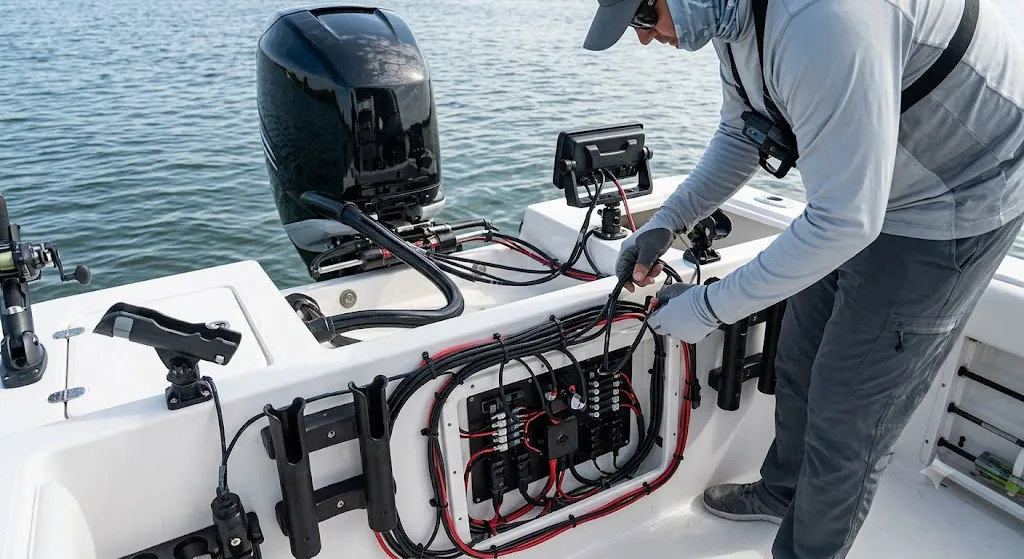
Keep wiring tidy and waterproof. Rod holders, fish finders, and live-well pumps all draw power, so check that your charging system can keep up with everything you plan to run throughout a long day.
Label your switches and carry a few spare fuses. When something fails at the ramp, or far from it, a calm, organized setup lets you fix the problem quickly and get back to the part you came for.
Conclusion
Always attach the engine kill-switch lanyard to the driver. It stops the motor instantly if someone falls overboard, which prevents a minor slip from becoming an emergency. Pair it with life jackets, a horn, and a basic first-aid kit.
Keep a spare propeller, shear pins or a nut kit, and a few basic tools aboard. Hitting a log or sandbar happens to everyone eventually. Being prepared lets you carry on fishing instead of calling for an embarrassing tow.